Beaver Creek Recreation Area
Missouri River Corridor
COEUS Army CorpsPeak windowVerified coordinates
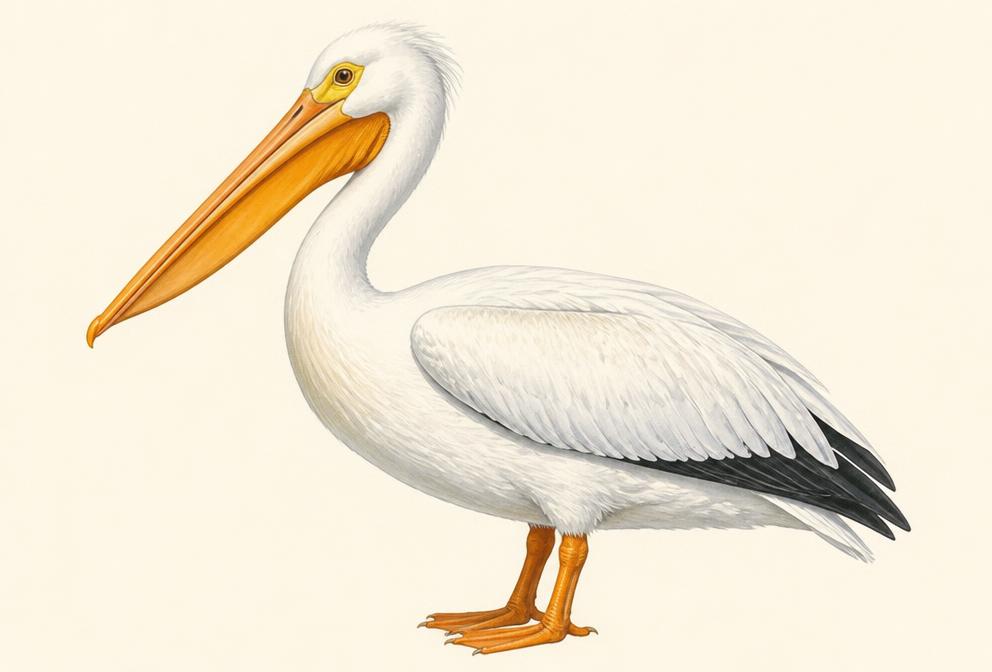
Top birds: American White Pelican, Franklin's Gull
Free day use
Pelicans · Fall migration in September
Live observation
Recent North Dakota reports from eBird, closest first from Bismarck (the default starting point).
These are observations submitted by birders and are not reviewed before appearing here. A report is not a guarantee that the bird is still present, and a sighting location is not a public-access guarantee.
Recent sightings data from eBird, Cornell Lab of Ornithology. Sunrise, sunset and sun direction: calculated on your device from the location's coordinates.
S = spring window, F = fall window, B = both. Built from the month arrays in the source record; months are January (1) through December (12).
Planning guidance from this bird's own seasonal record, not a live report. Weather shifts these dates every year, sometimes by a fortnight.
Migration journey reference: National Audubon Society Bird Migration Explorer.
See the full journey on Audubon's Bird Migration ExplorerJames River valley; Missouri River corridor
Photograph the colony only from established distant viewpoints; do not approach nesting islands. Synchronized cooperative fishing groups on lakes make spectacular flight and feeding shots.
Wildlife safeguards
Each place shows what eBird received within 10 miles of that place in the last 7 days. Reports further away belong to somewhere else and are never counted here.
Missouri River Corridor
Top birds: American White Pelican, Franklin's Gull
Free day use
Prairie Pothole Region
Top birds: American White Pelican, Wilson's Phalarope, Marbled Godwit
Free
Prairie Pothole Region
Top birds: American White Pelican, Black Tern
Free
Red River Valley
Top birds: American White Pelican, Franklin's Gull
Free day use
Southwest North Dakota
Top birds: Sandhill Crane, American White Pelican, Canada Goose
Free
Missouri River Corridor
Top birds: Bald Eagle, American White Pelican
Free
Recent sightings data from eBird, Cornell Lab of Ornithology.
Recent sightings data from eBird, Cornell Lab of Ornithology.
These are historical public posts collected as supporting evidence. They are not live sightings and do not guarantee current bird activity. Photos are not copied here — each entry links to the original post.
2026-07-13 — American White Pelican
Dozens, synchronized takeoffs plus cormorants
ND wetland(free text only — no mapped place, so no map pin)
Open source poston Facebook (opens in a new tab; older posts may have been removed by their author)2026-06-30 — American White Pelican
Flocks with geese and ducks (seen 'yesterday')
Shallow wetland, ND(free text only — no mapped place, so no map pin)
Open source poston Instagram (opens in a new tab; older posts may have been removed by their author)2026-06-16 — American White Pelican
About 10, drone aerial
Missouri River, ND(free text only — no mapped place, so no map pin)
Open source poston Instagram (opens in a new tab; older posts may have been removed by their author)2026-09-05 — American White Pelican
Flight and resting
ND marsh(free text only — no mapped place, so no map pin)
Open source poston Instagram (opens in a new tab; older posts may have been removed by their author)2026-09-11 — American White Pelican
Three in flight; caption: largest US breeding colony
Chase Lake NWR, ND · Chase Lake NWR
Open source poston Facebook (opens in a new tab; older posts may have been removed by their author)2026-09-02 — American White Pelican
Flock on shoreline, cormorants and gulls
Tewaukon NWR, sloughs near Wild Rice River headwaters · Tewaukon NWR
Open source poston Facebook (opens in a new tab; older posts may have been removed by their author)2026-08-13 — American White Pelican
Dawn flock on ponds (same-day)
Wetlands near Northwood, ND(free text only — no mapped place, so no map pin)
Open source poston Facebook (opens in a new tab; older posts may have been removed by their author)2026-08-17 — American White Pelican
Sunrise floating and takeoff (sunrise August 17)
Brush Lake, ND(free text only — no mapped place, so no map pin)
Open source poston Facebook (opens in a new tab; older posts may have been removed by their author)2026-07-27 — American White Pelican
Single bird on rock in current
James River, Ypsilanti, ND(free text only — no mapped place, so no map pin)
Open source poston Instagram (opens in a new tab; older posts may have been removed by their author)2026-07-26 — American White Pelican
Lone bird on open water
Near Fort Totten, ND (Devils Lake area)(free text only — no mapped place, so no map pin)
Open source poston Instagram (opens in a new tab; older posts may have been removed by their author)2026-08-28 — American White Pelican
Flock and prairie landscape
Chase Lake, Stutsman County, ND · Chase Lake NWR
Open source poston Instagram (opens in a new tab; older posts may have been removed by their author)2025-04-02 — American White Pelican
Cooperative underwater foraging (Michael Forsberg via National Audubon)
Chase Lake NWR · Chase Lake NWR
Open source poston Instagram (opens in a new tab; older posts may have been removed by their author)2026-05-28 — American White Pelican
Three gliding (#sweetbriarlake)
Sweetbriar Lake, ND(free text only — no mapped place, so no map pin)
Open source poston Facebook (opens in a new tab; older posts may have been removed by their author)2026-05-09 — American White Pelican
Close-up, breeding bill horn
Near Williston, ND(free text only — no mapped place, so no map pin)
Open source poston Instagram (opens in a new tab; older posts may have been removed by their author)