Garrison Dam Tailrace and Downstream Recreation Area
Missouri River Corridor
COEUS Army CorpsPeak windowVerified coordinates
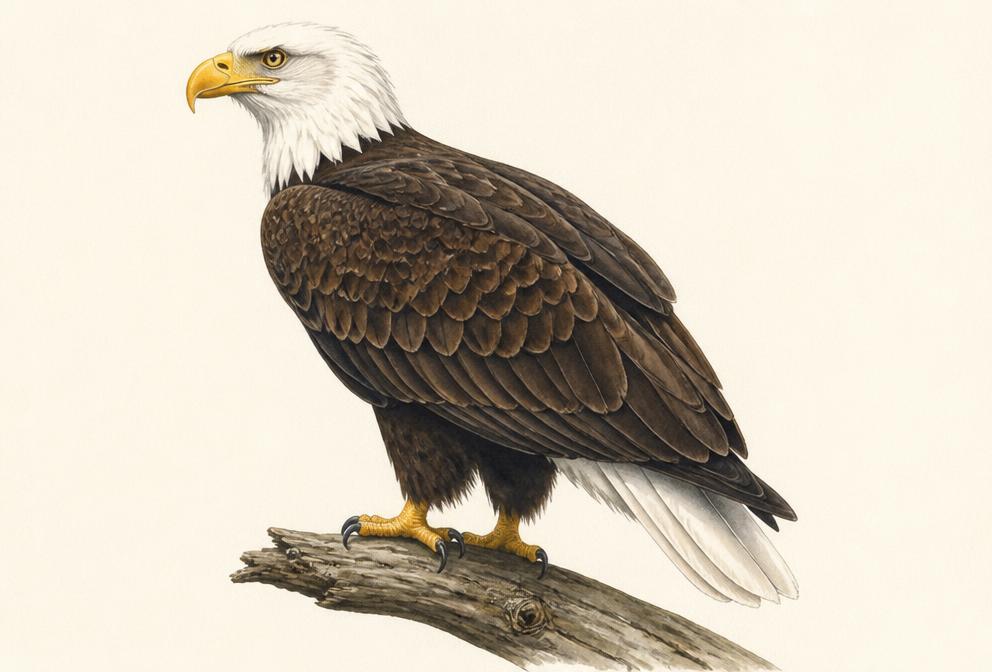
Top birds: Bald Eagle, Canada Goose
Free day use
Raptors · Fall migration in September
Live observation
Recent North Dakota reports from eBird, closest first from Bismarck (the default starting point).
These are observations submitted by birders and are not reviewed before appearing here. A report is not a guarantee that the bird is still present, and a sighting location is not a public-access guarantee.
Recent sightings data from eBird, Cornell Lab of Ornithology. Sunrise, sunset and sun direction: calculated on your device from the location's coordinates.
S = spring window, F = fall window, B = both. Built from the month arrays in the source record; months are January (1) through December (12).
Planning guidance from this bird's own seasonal record, not a live report. Weather shifts these dates every year, sometimes by a fortnight.
Migration journey reference: National Audubon Society Bird Migration Explorer.
See the full journey on Audubon's Bird Migration ExplorerMissouri River corridor; statewide
The tailrace below Garrison Dam concentrates fishing eagles in late fall through winter; it is the single most reliable ND eagle photography site.
Wildlife safeguards
Each place shows what eBird received within 10 miles of that place in the last 7 days. Reports further away belong to somewhere else and are never counted here.
Missouri River Corridor
Top birds: Bald Eagle, Canada Goose
Free day use
Red River Valley
Top birds: Snow Goose, Bald Eagle
Free
Missouri River Corridor
Top birds: Bald Eagle, American White Pelican
Free
Missouri River Corridor
Top birds: Baltimore Oriole, Bald Eagle
Free
Missouri River Corridor
Top birds: Baltimore Oriole, Yellow Warbler, Bald Eagle
Free
Prairie Pothole Region
Top birds: Redhead, Lesser Scaup, Bald Eagle, Yellow-headed Blackbird
Free
Devils Lake Basin
Top birds: Bald Eagle, Baltimore Oriole, Yellow Warbler
Free; no hunting permitted on the preserve by statute
Recent sightings data from eBird, Cornell Lab of Ornithology.
Recent sightings data from eBird, Cornell Lab of Ornithology.
These are historical public posts collected as supporting evidence. They are not live sightings and do not guarantee current bird activity. Photos are not copied here — each entry links to the original post.
2026-07-30 — Bald Eagle
Adult on hay bale (place-tagged)
Kellys Slough NWR · Kellys Slough NWR
Open source poston Instagram (opens in a new tab; older posts may have been removed by their author)2026-09-01 — Bald Eagle
Two in flight, golden hour
ND prairie/badlands horizon(free text only — no mapped place, so no map pin)
Open source poston Facebook (opens in a new tab; older posts may have been removed by their author)2026-07-31 — Bald Eagle
In shallow water, rocky shoreline
Lake Sakakawea, ND(free text only — no mapped place, so no map pin)
Open source poston Facebook (opens in a new tab; older posts may have been removed by their author)2026-09-01 — Bald Eagle
'Maverick', perched on branch (geotagged)
Medora, ND(free text only — no mapped place, so no map pin)
Open source poston Instagram (opens in a new tab; older posts may have been removed by their author)previous spring — Bald Eagle
Flight and pair perched
Farms near Edgeley, ND(free text only — no mapped place, so no map pin)
Open source poston Facebook (opens in a new tab; older posts may have been removed by their author)2026-06-22 — Bald Eagle
Adult guarding nest with eaglets
ND(free text only — no mapped place, so no map pin)
Open source poston Instagram (opens in a new tab; older posts may have been removed by their author)2026-03-22 — Bald Eagle
Four on ice (morning of March 22)
Rice Lake near Strasburg, ND(free text only — no mapped place, so no map pin)
Open source poston Facebook (opens in a new tab; older posts may have been removed by their author)2026-03-04 — Bald Eagle
On leafless branch, winter
Voltaire, ND(free text only — no mapped place, so no map pin)
Open source poston Instagram (opens in a new tab; older posts may have been removed by their author)2026-01-23 — Bald Eagle
Takeoff close-up and perched portrait
ND(free text only — no mapped place, so no map pin)
Open source poston Instagram (opens in a new tab; older posts may have been removed by their author)2026-04-16 — Bald Eagle
Eating rabbit on church grounds (Fargo, Prairie Heights)
Fargo, ND(free text only — no mapped place, so no map pin)
Open source poston Instagram (opens in a new tab; older posts may have been removed by their author)2026-05-01 — Bald Eagle
In flight, blue sky
ND Badlands(free text only — no mapped place, so no map pin)
Open source poston Instagram (opens in a new tab; older posts may have been removed by their author)2026-09-14 — Bald Eagle
Immature soaring, black and white
ND(free text only — no mapped place, so no map pin)
Open source poston Instagram (opens in a new tab; older posts may have been removed by their author)